
Speakers
Erez N. Allouche, PhD, PE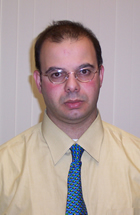
Dr. Erez Allouche is an assistant professor of civil engineering at Louisiana Tech University and also serves as the associate director of the Trenchless Technology Center. His research focuses on the development of new analysis models for various underground construction techniques, decision support software related to utility construction and the integration of advanced non-destructive testing methodologies and analysis software. He is the recipient of the Ontario Premier Research Excellence Award (2001), University Research Award (2005), College of Engineering Alumni Research Award (2006), and co-author of the winning student paper at the International No-Dig 2005. He is the inventor (or co-inventor) of four patents in the area of trenchless technologies and the author (and co-author) of over 130 publications in the areas of infrastructure management and pipeline installation using trenchless techniques, including 41 peer-review journal papers.
Currently Dr. Allouche is holding a NSF grant to collect data on damage to buried utilities in the after math of hurricane Katrina and Rita and conduct correlation analysis using GIS software.
"Computer Aided Tomography: Inspecting Buried Structures from Inside Out"
Non-conductive buried pipe systems deteriorate over time under the action of various applied and environmental loads, chemical and microbiological induced corrosions and differential settlements. A key for effective infrastructure management practices is the availability of reliable and timely inspection data that serve as the basis for the selection of proper rehabilitation/replacement methods. CCTV inspection is limited to detection of visible defects on the inner wall of the pipe. Defects hidden beneath encrustation or a liner as well as voids immediately outside of the pipe are currently difficult if not impossible to detect. It is proposed to develop a novel inspection technology, employing ultra-wideband (UWB) pulsed radar system, for detecting "below surface" defects, corrosion, and out-of-pipe voids in non-metallic buried pipes. The proposed method is very powerful as it is capable of detecting both, variations in material properties and variations in geometrical shapes. For example, a corroded region differs from non-corroded regions by changes in electrical properties, conductivity and permittivity. On the other hand, voids and can be detected by comparing the timing of the reflected signal from adjacent surfaces.
The presentation provides an overview of UWB technology and its applications in civil infrastructure. Thereafter, the results of a computer simulation using finite difference time domain (FDTD) analysis of a prototype UWB inspection system, which utilizes a UWB conical antenna, are presented. A mathematical model developed for calculating the pipe wall thickness based on an analysis of the returning signal is also described. Data collected from a full-scale experimental setup for validating the predictions of the numerical model are also presented. The presentation concluded with possible applications of this new technology in the reconstruction efforts along Louisiana's coastal areas.