
Speakers
Robert R. Twilley, PhD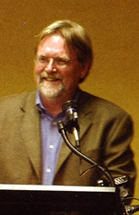
Dr. Twilley is a professor in the Department of Oceanography and Coastal Science and director of the Wetland Biogeochemistry Institute at Louisiana State University. He is presently serving part-time as Associate Vice Chancellor of Research and Economic Development to develop the 'Coastal Systems and Society' program at LSU. Most of Dr. Twilley's research has focused on coastal wetlands both in the Gulf of Mexico, throughout Latin America, and in the Pacific Islands.
Dr. Twilley has published over 80 articles including the 1999 co-edited book The Biogeochemistry of Gulf of Mexico Estuaries, several documents on global climate change, and edited a two-volume report with 63 other authors entitled Coastal Louisiana Ecosytem Assessment and Restoration (CLEAR) Model of Louisiana Coastal Area (LCA) Comprehensive Ecosystem Restoration Plan. He was recently selected as Distinguished Professor in Louisiana Environmental Studies at LSU; and was the recipient of the 2000 Distinguished Professor Award at the University of Louisiana at Lafayette, where he founded the Center for Ecology and Environmental Technology.
Dr. Twilley received his PhD in 1982 in plant and systems ecology from the University of Florida, and performed his post-doc studies at University of Maryland on the Chesapeake Bay.
"Challenges in Restoring the Mississippi River Delta: New Disciplines in Ecological Forecasting and Coastal Engineering"
Restoration is predicated on an understanding of ecosystem succession; and ecosystem trajectories require causal linkages between disturbances, ecological effects, and ecosystem response. To meet these challenges in developing a restoration program, we developed the Coastal Louisiana Ecosystem Assessment and Restoration (CLEAR) framework for a coastal ecosystem forecasting system. The challenge was to build a tool that could develop systems ecology (with both conceptual and numerical models) to forecast ecosystem response to different elements of engineering design. Rising sea level, storm disturbance, and hydrologic changes in dynamic coastal environments such as deltas challenge the capacity of restoration projects to effectively anticipate ecosystem state change. Conceptual frameworks to describe the casual linkages in ecosystem state change, hydrogeomorphic features, and landscape patterns of environmental settings limits approaches to simulating ecosystem dynamics. I will evaluate conceptual and simulation models used to link geophysical processes, geomorphic features, and ecological succession in selected regions of Louisiana Coastal Area (LCA). Land-surface dynamics (eg. subsidence and sediment loading) is key to landscape patterns in marsh instability and conversion to open water. Yet soil-plant physiochemical models of disturbance in each system defines resiliency of geomorphic evolution with ecological succession in response to disturbance and restoration forecasts.